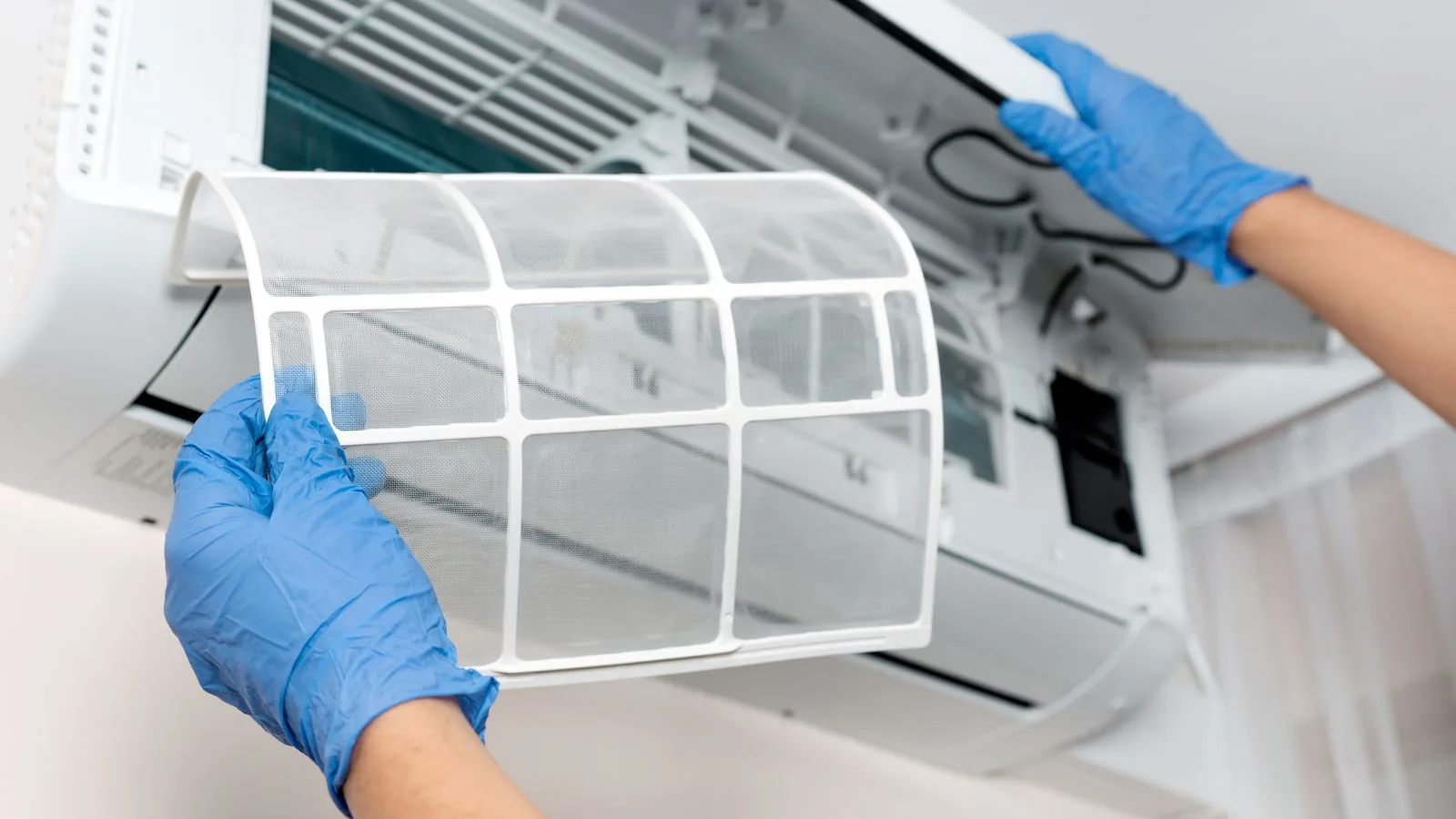
An air conditioner makes water every hour it runs, and that water leaves through a condensate drain. When the drain clogs, the pan overflows, and the water goes into the closet, the ceiling below an attic unit or the floor around a basement unit. AC leak water damage repair in Owings Mills means stopping the system, drying what got wet and checking that mold has not started.
This page is about HVAC condensate and drain failures. Water coming through a roof is handled on the ceiling page, and wet drywall in general on the wall and drywall page.
First steps when an AC is leaking
Switch the system to off at the thermostat so it stops making condensate. Put a bucket or towels under any drip and, if you can reach it safely, shut off the unit at its service switch.
Call an HVAC technician to clear the drain line and check the pan, and call us for the water damage. If the leak is above a ceiling, keep an eye on bulges and avoid standing under them.
Why condensate lines clog and overflow
Algae and sludge build up in the drain line, and a dirty filter or low refrigerant can make the coil ice up and then drip heavily when it thaws. Attic units are the highest-risk because the leak is out of sight.
Ask your HVAC company about a float switch that shuts the system off when the pan fills. It is an inexpensive part that can turn a flood into a nuisance, and many technicians install it during routine service.
Where AC leak damage hides
Because the water is clean at first but sits in a warm, humid space, mold risk is higher than with many other leaks, so moisture readings matter even when the surface looks dry.
- The ceiling directly below an attic air handler
- Closet floors and baseboards near an interior unit
- Insulation around the ductwork
- Subfloor under a basement or utility room unit
- Walls near a window or wall unit
Water coming through the ceiling?
Call and we will help you plan the dry-out.
How we repair AC leak water damage
We take moisture readings in the ceiling, walls and floor, open the wet cavity if needed and remove saturated insulation or drywall. Air movers and dehumidifiers then dry the space, and we recheck readings until they hold.
Repairs to the HVAC system belong to your HVAC contractor. We schedule around that visit so the leak is stopped before we dry. If mold growth is already visible, say so on the call so the crew can plan for it.
Preventing the next overflow
Replace or clean the filter on schedule, because a clogged filter lets the coil freeze and then thaw into the drain pan. Pour a cup of vinegar through the condensate line a few times each cooling season to limit algae. A float switch shuts the unit off when the pan fills.
HVAC technicians can add or test these devices at a service visit.
Cost factors and insurance
Coverage depends on whether the leak was sudden or gradual, and gradual leaks and maintenance failures are often excluded. Check your policy or ask your insurer.
- How long the line has been leaking
- Ceiling and insulation affected
- Whether flooring or cabinets are wet
- Access to the attic
- Drying time and equipment
Ask your HVAC company for a written note of what failed, because it helps document the event. See structural drying for how we confirm the space is dry. Want your real number? Call the 24/7 line.
Frequently asked questions
Yes. Our line is staffed 24/7 and we will help you plan the dry-out, with same-day response when crews are available. Turn the system off first so it stops adding water.
It can create the damp conditions mold needs, which is why drying matters. Health questions belong with a physician, and visible mold should be assessed under the S520 standard.
Your HVAC contractor. We dry and restore the water damage and coordinate timing so the leak is fixed before we dry.
Schedule regular service, replace filters, keep the drain line clear and ask about a float switch that shuts the unit off when the pan fills.
Water still spreading?
Describe your ac leak water damage problem to the dispatcher and get safety steps right away.