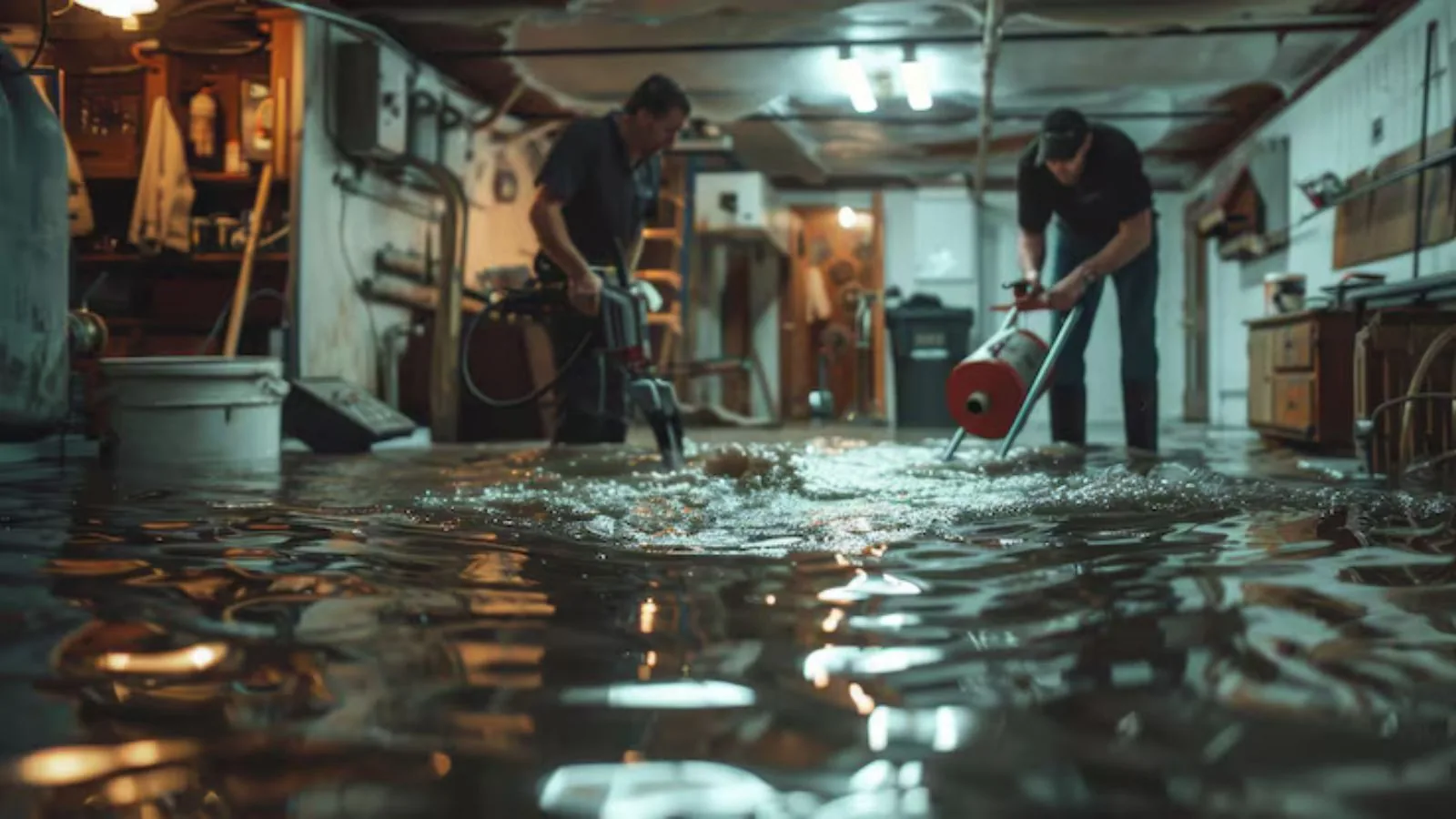
Standing water in a basement, hallway or ground floor is an emergency in Owings Mills because every hour it sits, it climbs into drywall, trim and subfloor. Water extraction is the first job in water damage restoration, and it means pumping and vacuuming the bulk of the water out of the structure before any drying equipment goes in. Our 24/7 line is staffed day and night, so you can call at 2 a.m. and get a plan.
This page covers extraction only: removing standing and pooled water. If the source is a specific failed pipe or appliance, the burst pipe page and the appliance leak page explain what to do about that source. For the drying that follows, see structural drying and dehumidification.
When standing water is an emergency
Water deeper than a quarter inch across a room is an emergency, and so is any amount touching an outlet, a baseboard heater or a furnace. While you wait for a crew, stop the source if you can reach it safely, and shut off the main water valve if the leak is a supply line.
Turn off power to the wet area only from a dry panel and a dry floor. If water is near the electrical panel or you smell gas, leave, call 911 or the utility first, then call us. Lift rugs, books and electronics onto dry surfaces and keep children and pets out of the room.
What pumping and extraction actually involve
Extraction crews match the tool to the water depth. Submersible pumps clear water that is more than an inch or two deep. Truck-mounted or portable extraction units pull water from carpet, pad and flat floors, and wet vacuums finish low spots and edges.
A moisture meter and a thermal camera then show where water traveled beyond the visible puddle, because water wicks up drywall and runs under baseboards. Extraction is not finished when the floor looks wet-free. It is finished when the readings show the bulk water is gone and drying can begin.
Why Owings Mills basements and low rooms flood
Owings Mills sits on the Gwynns Falls headwaters and has creeks and steep hillside lots. In 2017 a flash flood pushed creek water to within inches of a family porch near Hammershire Road and cut off 24 housing units, according to local news coverage. Water arrives fast in this area, and ground-floor rooms and walkout basements take it first.
Tie-back for you: if your property backs onto a stream or sits below the street grade, keep a wet vacuum and a few contractor bags on hand, and check the FEMA Flood Map Service Center for your exact address. The map, not a neighbor's experience, tells you your flood zone.
Pumps ready when you are
Describe the depth and the source and we will tell you what happens next.
Clean water, gray water and sewage change the job
Not all standing water is the same. Water from a supply line is clean at first but stops being clean after it sits. Water from a washing machine or a dishwasher is gray water. Water that came from a sewer line, a toilet overflow or a creek is contaminated and needs protective gear and removal of porous materials.
The industry standard for these categories is ANSI/IICRC S500, and you can ask any company whether its crews work to it. If the water has any sign of sewage, read the sewage backup cleanup page before you touch anything.
Options after the water is out
Once the bulk water is gone, you have three common paths. Dry in place when materials stayed wet for a short time. Remove and replace wet carpet pad, baseboard and the lower strip of drywall when water sat longer. Or pack out contents so the room can be opened up fully.
Each path has a trade-off in time and repair scope. Drying in place costs less but only works if moisture readings drop on schedule. Early removal costs more up front but can keep a small loss from becoming a mold or rebuild problem. Our crew explains the reading behind each recommendation before work starts.
What affects the cost of extraction
Exact pricing depends on moisture readings we take on site, so we do not quote a number over the phone.
- Water category, since sewage or creek water adds protective gear and disposal
- Depth and square footage of the affected area
- Whether carpet, pad or flooring must be lifted to reach trapped water
- How many hours or days of drying equipment the building needs
- Whether the room is a finished basement with drywall, or a bare concrete floor
Insurance usually responds to sudden and accidental water damage, but flood damage generally needs a separate flood policy, so check your policy or ask your insurer. Document the water with photos before extraction starts. Want your real number? Call the 24/7 line.
Frequently asked questions
Yes. The dispatch line runs 24 hours a day, every day, and nights and weekends are when most extraction calls come in. We take your details, give you safety steps to follow, and arrange same-day response when crews are available.
As fast as possible. Drywall can wick moisture upward within hours, and the general guidance is to dry wet materials within 24 to 48 hours to limit mold growth. Call before you start mopping.
Small spills yes. For anything deeper than a couple of inches, or water that touched electrical devices or sewage, the risk of shock and contamination is real. A crew also measures what is left inside the walls, which a rental pump cannot do.
Extraction removes the bulk water. Drying with air movers and dehumidifiers is the next step, and we plan both together so the building is not left damp after the pump stops.
Water still spreading?
Describe your water extraction problem to the dispatcher and get safety steps right away.