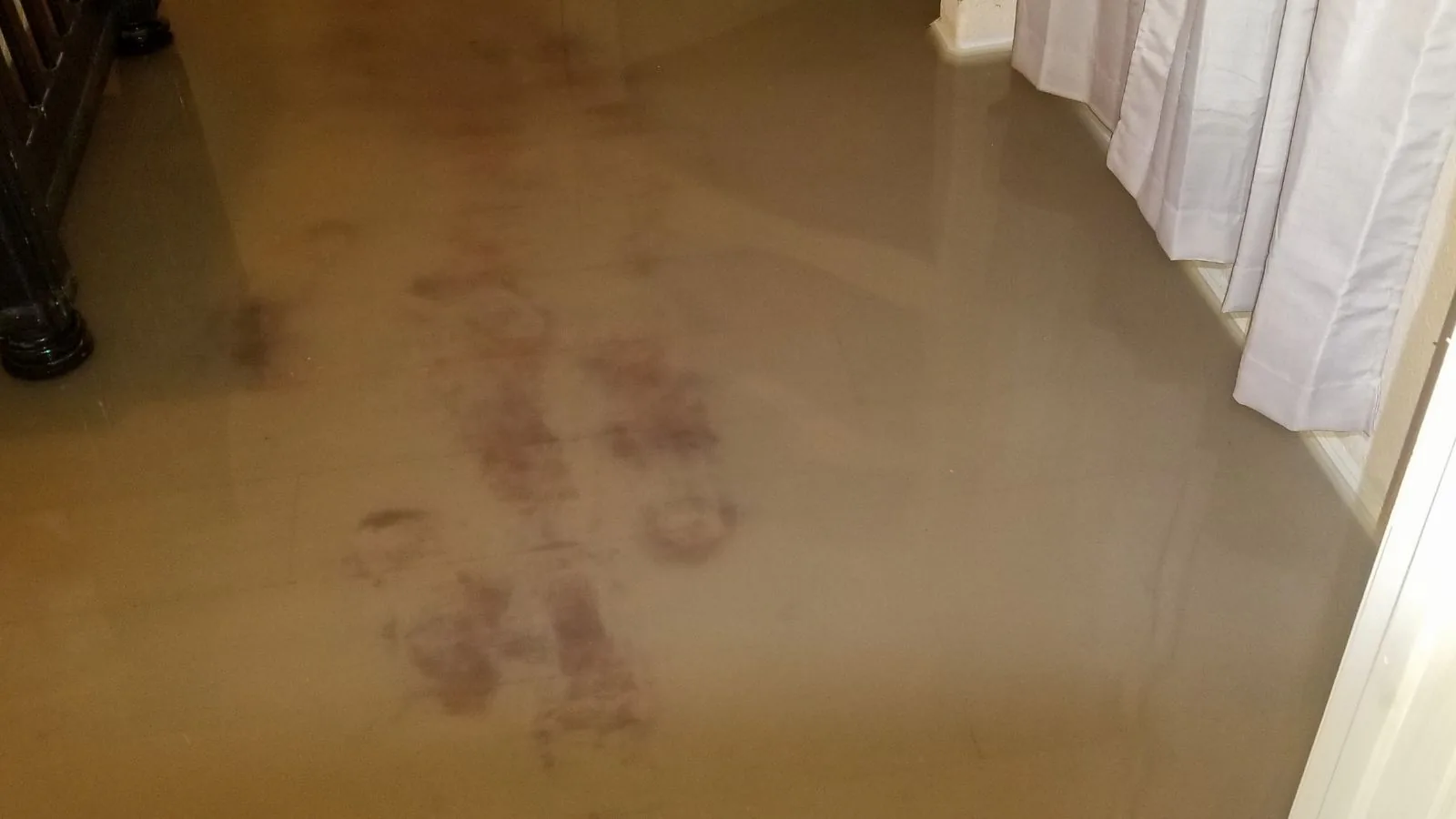
Sewage backup cleanup in Owings Mills is a contamination job, not a drying job. Water that came up through a floor drain, toilet or sewer cleanout can carry bacteria and other contaminants, and it is classified in the industry as Category 3. That changes what gets removed, what gets worn and how the room is cleaned. If sewage is on your floor, call our 24/7 line and stay out of the water.
The trade term for what follows is Category 3 water loss under the ANSI/IICRC S500 standard. If you searched for "raw sewage in my basement" or "toilet overflowed everywhere", you are in the right place.
Sewage backup: what to do first
Keep everyone, including pets, out of the contaminated area. Do not run water down any drain, flush toilets or use the washing machine, because that pushes more wastewater into the home.
Turn off power to the area only if you can reach the panel without stepping through water. If water is near electrical devices, call 911 or the electric utility first. Wear waterproof boots and gloves if you must enter, and wash thoroughly afterward. Then call us.
Find out where the blockage is
A backup can come from a clog in your own lateral line or from a blockage in the county main. Baltimore County Department of Public Works handles reports of sewer backups and overflows, and its water issues page treats basement seepage as a private property matter. Ask the county whether the main is blocked.
If the main is blocked, ask about the county's process for claims, and tell your insurer. If the clog is on your property, a plumber clears it. Either way, document the water with photos before cleanup.
What Category 3 cleanup involves
- ContainSeal off the area and protect clean rooms.
- ExtractPump out contaminated water with dedicated equipment.
- RemoveCarpet, pad, insulation and wet drywall are bagged and removed.
- Sanitize and drySurfaces are cleaned, treated and dried to target readings.
Raw sewage on the floor?
Call now. Protective gear and disposal are part of the plan.
What can be saved
Porous materials that touched sewage, such as carpet, pad, insulation, upholstery and drywall, are generally removed and discarded because they cannot be reliably cleaned. Hard surfaces, framing and some contents can often be cleaned and sanitized.
We list what is kept and what is removed so your insurer has a clear record. Photographs before removal protect your claim.
Insurance and backup coverage
The Maryland Insurance Administration explains that sewage entering through drains, or an overflowing sump pump, may be covered if you bought a water and sewer backup endorsement. With that endorsement, most policies pay for the water or sewage damage but usually not the cost to repair the pipe. Maryland law requires insurers to offer this coverage.
Check your policy language, call your insurer and keep every receipt. A backup caused by a flood event may fall under flood rules instead, so confirm with your insurer.
Cost factors
Pricing is set after we measure the affected area, and we explain scope and price before work begins.
- Volume of contaminated water and area affected
- Materials that must be removed and disposed of
- Protective equipment and containment
- Sanitizing and drying days
- Rebuild after removal
For the drying that follows contamination cleanup, see structural drying. If the water came in from outside, flood damage cleanup applies. Want your real number? Call us.
Frequently asked questions
Yes. Sewage backups need fast action, and our dispatch line is open 24/7. The dispatcher gives safety steps on the call and sends a crew the same day when one is free.
Sewage water can contain bacteria and other contaminants, so avoid contact and keep children and pets away. Questions about health effects belong with a physician or your local health department.
A small spill may be manageable with protective gear and disinfectant, but anything that soaked carpet, drywall or reached a larger area should be handled by trained crews.
A plumber clears a blockage on your lateral. If the problem is in the main, contact Baltimore County Department of Public Works, which handles backup and overflow reports.
Water still spreading?
Describe your sewage backup cleanup problem to the dispatcher and get safety steps right away.