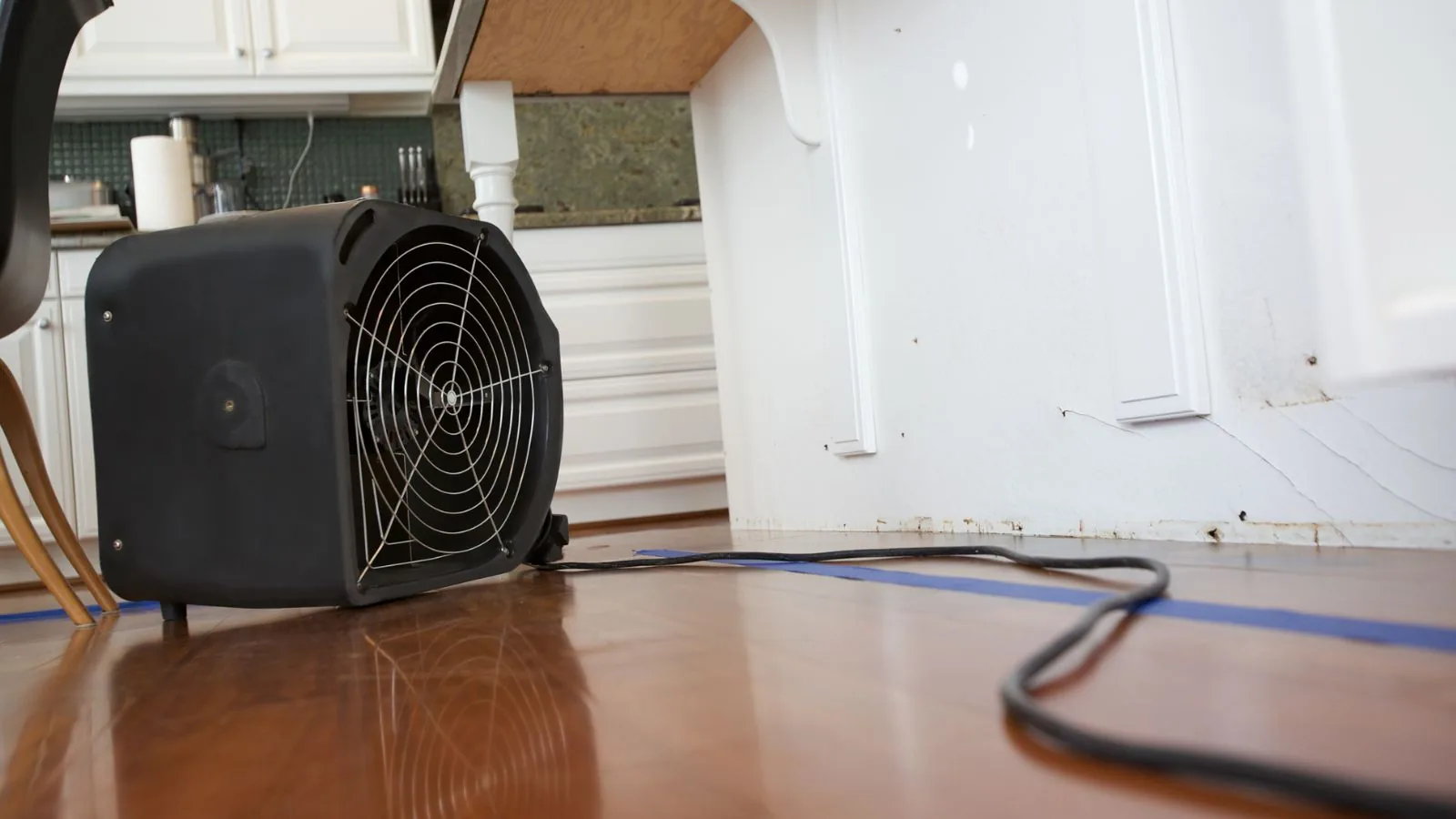
Kitchens combine supply lines, drain lines, a dishwasher and often a refrigerator ice maker, so water damage here is common and often hidden. Kitchen water damage restoration in Owings Mills means finding where the water went, drying cabinets and flooring and removing what cannot be dried. Our 24/7 line is staffed if you need to start now.
This page is about the kitchen itself: cabinets, the sink area and the floor. When an appliance is the source, the appliance leak page explains the failure, and flooring problems are on the hardwood floor page.
Water under the kitchen sink: first steps
Close the two shutoff valves under the sink, hot and cold. If they will not turn, close the main. Empty the cabinet and place towels or a tray under the leak.
Look at the back and bottom of the cabinet for stains, soft particleboard and swelling. Photograph it before cleaning. Do not use heat to dry it yet, since that can warp cabinet faces and hide moisture inside.
How water damages kitchen cabinets
Most cabinet boxes are particleboard, which swells when wet and does not return to its shape. Solid wood and plywood fare better. Water wicks upward from the floor and spreads behind toe kicks.
A moisture meter shows whether the cabinet and wall behind it are wet. If the box has swelled or the laminate is peeling, replacement is usually needed. If the wood is sound, drying can save it.
Where kitchen leaks come from
Sink supply and drain lines
Loose fittings and cracked traps drip for weeks.
Dishwasher
Door seals and drain hoses leak under the toe kick.
Refrigerator line
Ice maker tubing leaks into the floor.
Faucets and disposals
Worn seals and fittings drip into the cabinet.
Cabinets swelling?
Call and we will take moisture readings.
Drying a kitchen
We pull toe kicks and open cavities so air can circulate, then set air movers and dehumidifiers. Floors under cabinets are tested because water often travels under them.
If flooring was installed over a wet subfloor, drying may take longer than expected. We log readings until the cabinet bases, flooring and walls are in range.
Repair options and trade-offs
Dry and keep cabinets when the boxes are sound, or replace the wet bases and keep the uppers. Full replacement is rarely needed unless water reached many cabinets. Countertops often stay when the cabinets are replaced carefully.
Plumbing repair and appliance work are done by licensed trades, and Baltimore County requires permits for plumbing and electrical work. We coordinate timing so the leak is fixed before we dry.
Dishwasher, sink base and toe kick
The toe kick area under cabinets is a trap for kitchen water. Water runs along the floor, slips behind the kick board and soaks the bottom of the cabinet boxes where it cannot be seen. Pulling the kick board lets technicians check and dry that cavity.
Particleboard cabinets swell when wet and rarely return to shape, while plywood boxes tolerate water better. Countertops usually survive, but the cabinets under them may not.
Call before you remove anything. A quick moisture check shows how far the water traveled, and it keeps you from tearing out parts that can be saved.
Cost factors and insurance
A sudden leak is often covered for the resulting damage, while a slow leak often is not. Check your policy or ask your insurer.
- Number of cabinets and flooring area wet
- Whether the subfloor is wet
- Cabinet material
- Drying days and equipment
- Rebuild and finish work
See structural drying for the dry-out process. Want your real number? Call us.
Frequently asked questions
Plywood and solid wood often can. Swollen particleboard usually cannot. Moisture readings and a look at the cabinet material decide.
Even a slow drip can soak the cabinet base and floor over weeks. If you see staining or a musty smell, have it checked.
We dry and remove damaged materials and document the loss. Cabinet replacement is carried out by a remodeling contractor, and we coordinate timing.
Check the toe kick and the cabinet bottom. Staining near the dishwasher suggests that source, and staining below the sink suggests the supply or drain lines.
Water still spreading?
Describe your kitchen water damage problem to the dispatcher and get safety steps right away.