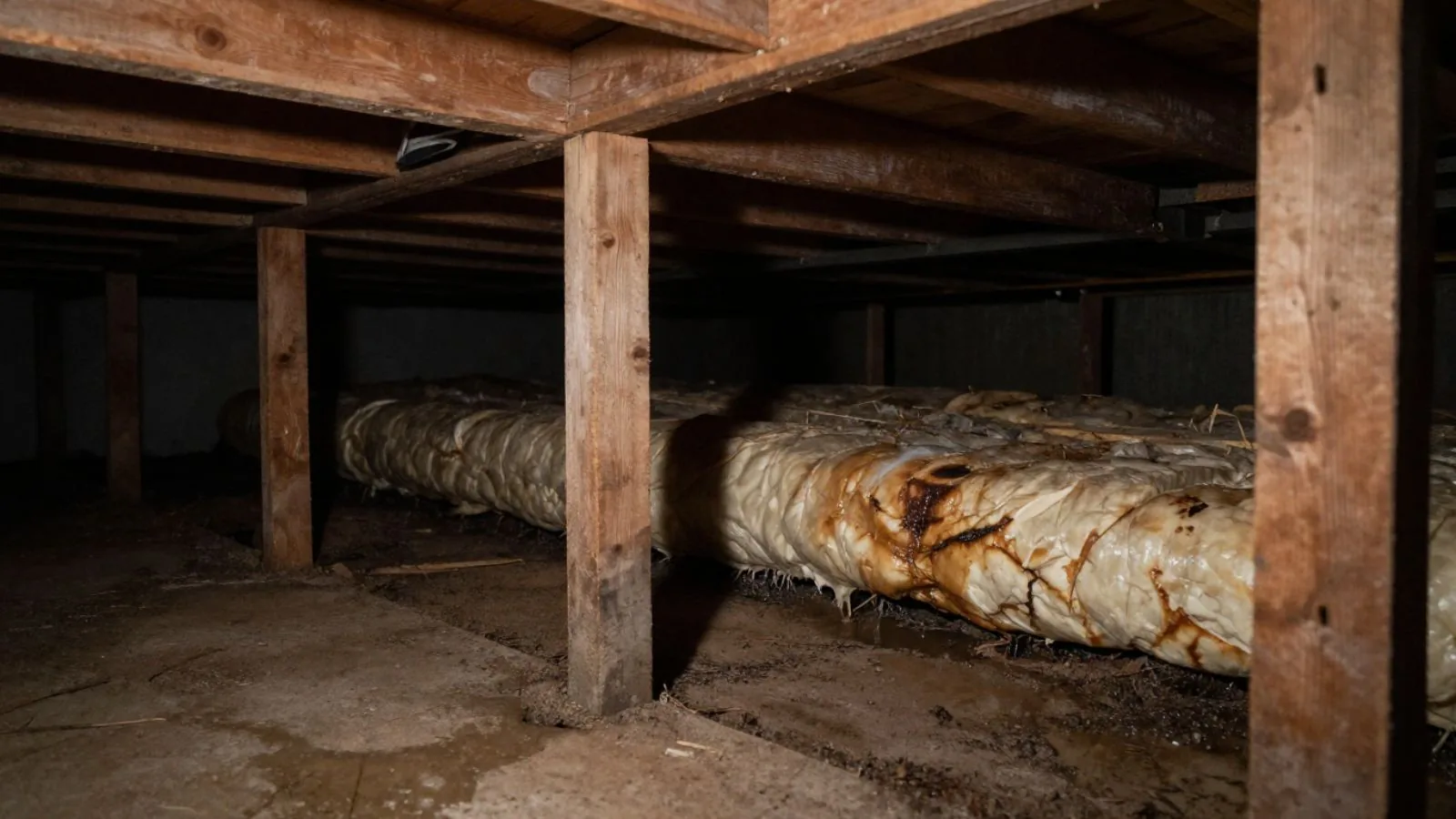
A crawl space is the unseen part of a house, and it is where water often does damage for months before anyone looks. Crawl space water damage in Owings Mills includes standing water, soaked insulation, wet joists and damp soil that raises humidity under the floor. Cleaning it means removing water, pulling wet insulation and drying the framing.
This page covers the under-floor void. A walk-in lower level is the basement page, and a leaking line within the home is on the burst pipe page.
Signs of crawl space water damage
Crawl spaces are dark and cramped, so many owners never look. If you see any sign above, a moisture inspection of the framing tells you whether the damage is surface level or structural.
- Insulation drooping between the joists
- A musty smell in rooms above
- Floors that feel soft or bounce
- Visible standing water or damp soil
- Condensation on ducts or pipes
Why water gets under the house
Common sources are a leaking supply or drain line, a failed water heater drain, downspouts that dump water at the foundation, surface runoff in heavy rain and groundwater pushing in. Owings Mills has creeks and sloping lots, so drainage matters.
A restoration crew dries what got wet. Fixing grading, gutters or a drainage system is a separate trade, and restoration is not waterproofing. We tell you honestly when a recurring problem needs a drainage contractor.
Safety before anyone goes in
Check that power to the crawl space is off if wiring is wet or the water is deep. Look for hanging insulation, nails and wildlife. Do not crawl into standing water that may reach outlets or a furnace.
If the water is contaminated by a sewer or septic line, stay out and call. Our crews wear protective gear and use pumps and wet vacuums designed for these tight spaces.
Water under the floor?
Call and describe what you see. We will plan extraction and drying.
How we dry a crawl space
We extract standing water, remove saturated insulation and measure moisture in joists, subfloor and sill plates. Low-profile air movers and dehumidifiers dry the framing, and vapor barriers are checked for damage.
We log readings until wood moisture is back in range. If the cause is ongoing, we say so, because drying a space that keeps flooding only delays the next call.
Options and trade-offs
A small, short-lived leak may need only drying and insulation replacement. Ongoing moisture may call for a drainage fix, a sump system or encapsulation by a specialist. Each has a cost and a trade-off, and a plumber or drainage contractor should be involved.
We document what we find with photos and readings, which helps with insurance and with the contractor who fixes the cause.
Vapor barriers and ventilation after drying
After water is out of a crawl space, the question becomes how to keep it dry. A vapor barrier on the soil, working vents or a conditioned space design all affect moisture. We do not install these systems, but we point out what we see.
If moisture returns after drying, the cause is usually drainage, a plumbing leak or high humidity, and a drainage contractor or plumber addresses it.
Cost factors and insurance
Coverage for crawl space water depends on the cause. Sudden pipe failure is often covered for the damage, while seepage and groundwater are generally not, according to the Maryland Insurance Administration. Check your policy or ask your insurer.
- Standing water depth and area
- Insulation and vapor barrier replacement
- Wood moisture and drying days
- Access and crawl height
- Whether the water was clean or contaminated
See structural drying for the standards we use. Want your real number? Call us.
Frequently asked questions
Yes. Our line is staffed 24/7. For standing water we give safety steps and arrange same-day response when crews are available, though non-urgent damp spaces may be scheduled.
Some moisture is common, but standing water, soaked insulation and a musty smell warrant a check. Ongoing moisture can damage wood framing.
No. We dry and restore after water damage. Waterproofing and drainage are separate trades, and we say so when a recurring problem needs one.
Usually not. Wet fiberglass or cellulose loses its performance and holds moisture against wood, so it is removed and replaced once the framing is dry.
Water still spreading?
Describe your crawl space water damage problem to the dispatcher and get safety steps right away.