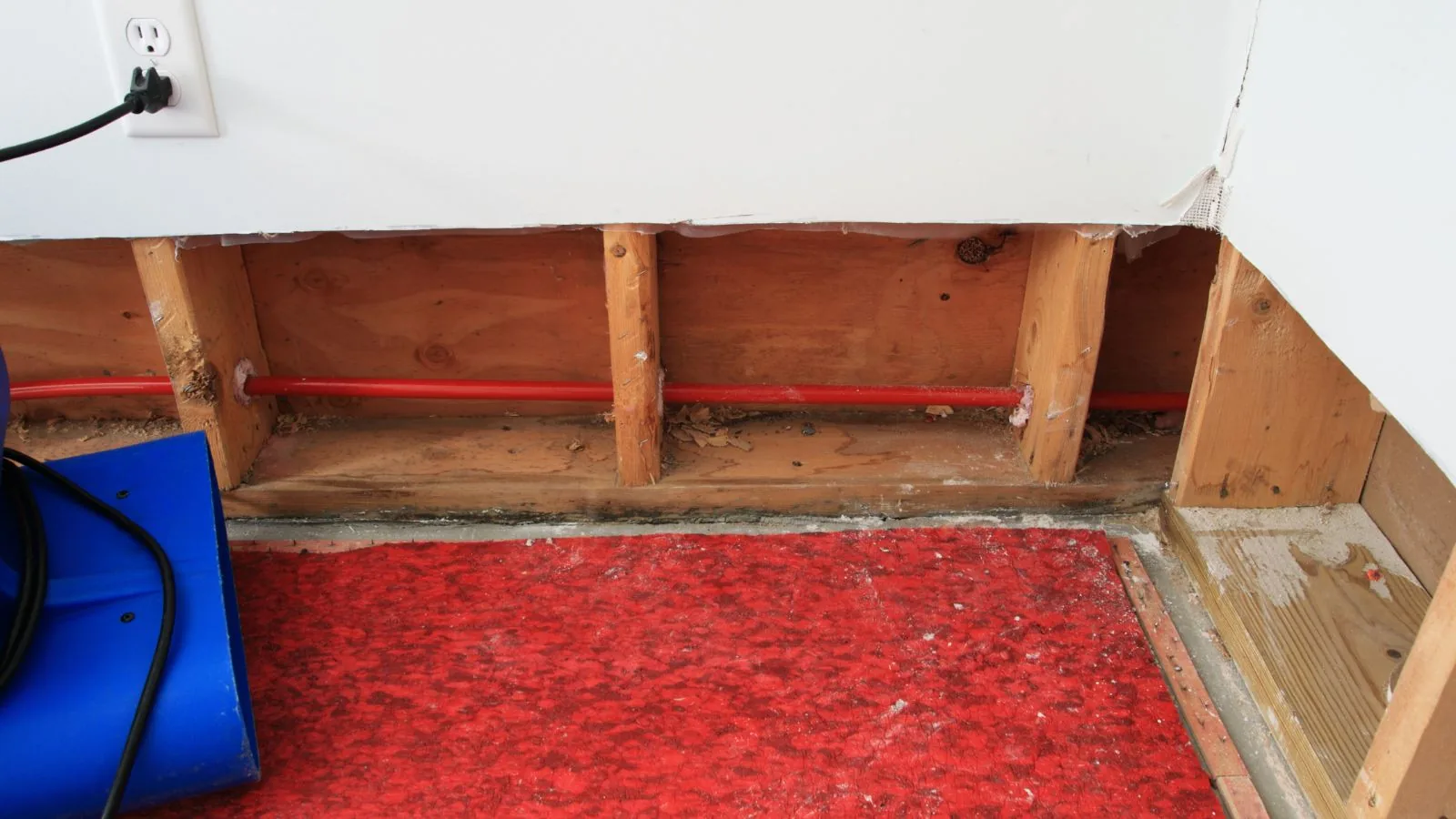
Wet carpet is not always ruined. Carpet water damage restoration in Owings Mills starts with a question: what kind of water was it, and how long has it been wet? Clean water caught quickly can often be extracted and dried in place.
Gray or contaminated water, or carpet that has been wet for days, generally cannot be saved. Our 24/7 line is open if you need a decision today.
This page covers carpet and pad. For deep water, see water extraction, and for sewage-contaminated carpet see sewage backup cleanup.
Carpet and pad: two layers, two decisions
Carpet is the visible layer, and pad is the foam or fiber layer underneath, which acts like a sponge. Pad is cheaper to replace than to dry, and many crews remove and replace it even when the carpet is saved.
Carpet tack strips, the subfloor and baseboards also get wet. We test all of them with moisture meters before deciding what stays.
Water categories and what they mean for carpet
Categories come from the ANSI/IICRC S500 standard, and the category can worsen with time because bacteria grow in standing water.
| Water category | Example source | Typical result |
|---|---|---|
| Category 1 | Supply line, sink overflow | Often dried in place if caught fast |
| Category 2 | Washing machine, dishwasher | Case by case, often pad replaced |
| Category 3 | Sewage, creek or floodwater | Carpet and pad usually removed |
How we dry wet carpet
- ExtractCarpet extractors pull water from carpet and pad.
- Lift and padCarpet is lifted at a corner and the pad is removed if needed.
- DryAir movers and dehumidifiers dry the carpet, tack strips and subfloor.
- Clean and verifyCarpet is cleaned and readings are checked.
Carpet still wet?
Call now. The first 48 hours matter most.
Signs carpet needs replacement
A musty smell means moisture is still in the pad or subfloor. Ask the crew to show readings, not just to confirm the carpet looks dry.
- A musty smell that remains after drying
- Delamination or a loose backing
- Stains that spread
- Contaminated water contact
- Wet for more than a couple of days
Stretching, re-laying and what comes back
When carpet can be saved, the next question is whether it can be put back. Wet carpet is lifted from the tack strip, dried and then power stretched so it lies flat again. If the backing delaminated or the seams opened, stretching will not hold.
Technicians also check the tack strips and the floor under the pad. Wood tack strips that stayed wet can stain the carpet edge or grow mold, and they are cheap to replace while the room is open.
Plan on a clean, deodorized finish after drying. A musty smell after the carpet feels dry means moisture remains in the pad or the slab, and further drying or removal is needed.
Carpet over concrete versus carpet over wood
Carpet over a concrete slab dries differently from carpet over a wood subfloor. Concrete holds water for a long time and releases it slowly upward, so a pad glued or laid on slab can stay damp long after the surface looks dry.
Over wood, water can soak the subfloor and the joists below. Moisture readings in both layers are needed before anyone decides the floor is ready for new pad and carpet.
This is why we log readings on the subfloor as well as the carpet. Dry carpet on a wet floor is a mold problem waiting to happen.
Cost factors and insurance
Sudden water damage is often covered for the resulting carpet damage, while neglected leaks often are not. Check your policy or ask your insurer.
- Square footage of carpet and pad
- Water category
- Whether the subfloor or walls are also wet
- Drying days and equipment
- Replacement carpet and pad
See hardwood floors for wood flooring after a leak, and basement water damage for finished lower levels. Want your real number? Call us.
Frequently asked questions
Often, if the water was clean and the carpet is dried within a day or two. Contaminated water or long exposure usually means replacement.
Often yes. Pad holds water and is inexpensive to replace compared to the risk of leaving it wet.
Moisture meters give a reading, and a damp smell or cool spot means moisture remains.
Mold can grow when wet materials stay damp for roughly 24 to 48 hours or longer, which is why fast drying matters.
Water still spreading?
Describe your carpet water damage problem to the dispatcher and get safety steps right away.