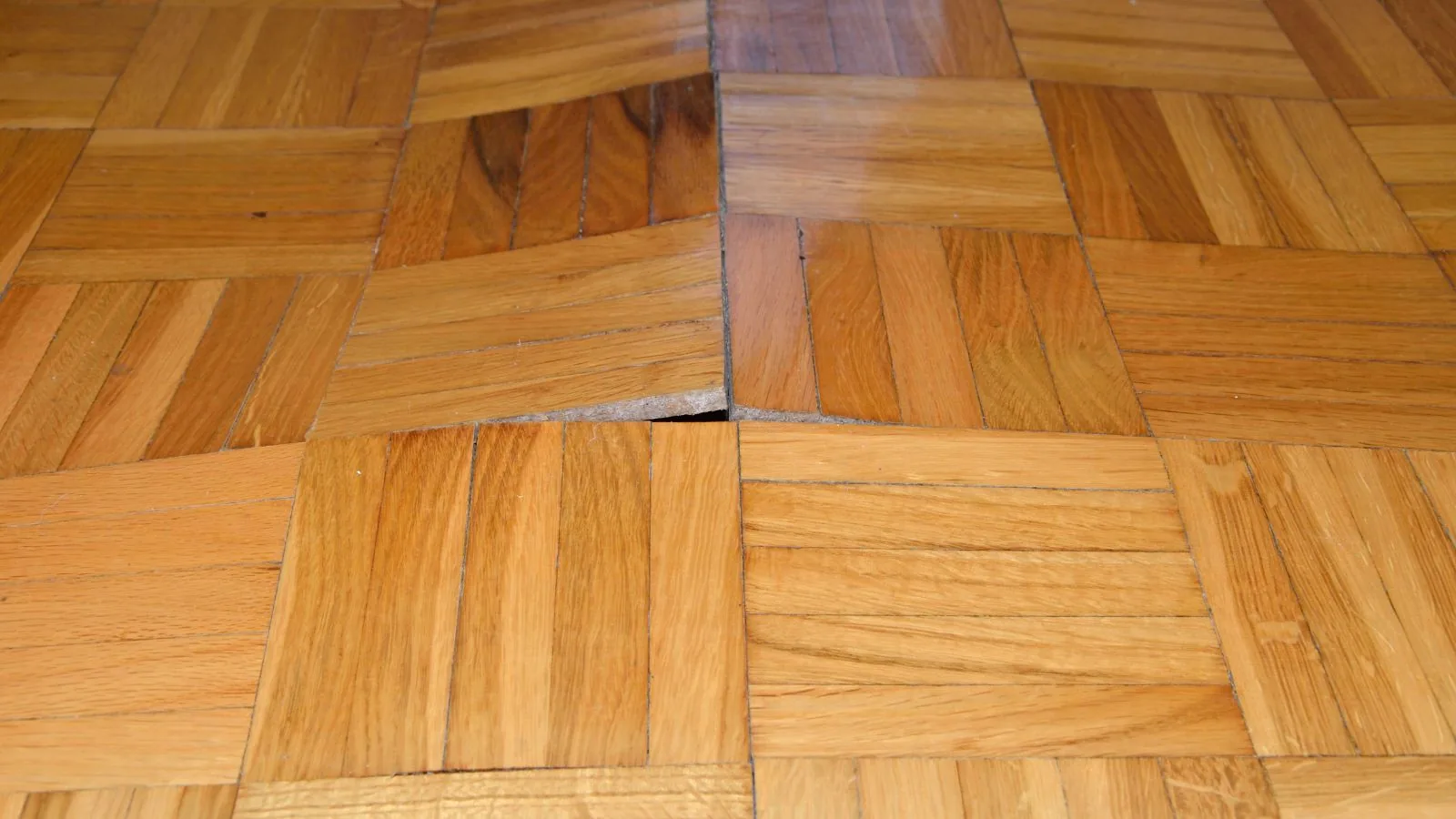
Hardwood floor water damage in Owings Mills usually starts as a subtle change: edges that curl upward, a floor that feels wavy underfoot, a gap that closes or opens, dark stains at the seams. Wood absorbs water through the bottom and edges, so by the time the surface looks wrong the damage is well underway. Our 24/7 line is open if you want a moisture check.
This page covers wood and laminate floors. Carpet is on the carpet page, and the leak that caused it may be an appliance leak or an overflowing HVAC condensate line.
What cupping, crowning and buckling mean
Cupping is when board edges rise higher than the center, a sign that the bottom absorbed more moisture than the top. Crowning is the reverse and can appear after a floor is sanded while still damp. Buckling is when boards lift off the subfloor, and it usually means a lot of water got in.
Laminate and engineered wood swell at the seams and may delaminate. Cupping can improve if the floor dries slowly and the source stops, so do not sand or refinish until moisture readings are stable.
Common causes of hardwood water damage
- A washer or dishwasher line that leaked behind the machine
- A condensate line from an HVAC unit that backed up
- A refrigerator ice maker line
- A plumbing leak under the floor
- Water tracked in by a storm or a flooded lower level
How we assess and dry a wood floor
We take moisture readings on the boards and on the subfloor, since water often sits below the visible surface. A thermal camera maps wet areas. If boards are wet but sound, we use floor drying systems and air movers to pull moisture out of the wood slowly.
Drying too fast can crack boards, so the method matters. We also open baseboards or remove a few boards to reach wet subfloor if needed. We log readings until they fall to a stable range.
Floor starting to cup?
Call and describe the leak. We will tell you what to check.
Repair or replace
If boards dry back flat and tight, sanding and refinishing may restore them. If they stay cupped, split or buckled, replacement of the affected section is usually needed, and matching the finish can be a challenge in older homes.
Replacement and refinishing are carpentry and flooring trades. We provide the moisture documentation your flooring contractor and insurer will want, and we advise on timing so nothing is installed over a damp subfloor.
Species, finish and board width matter
Not all hardwood reacts the same way. Wide planks cup more than narrow strips, and some species swell more than others. A site finished floor with a thick coating resists surface water better than a floor with a worn finish.
Engineered hardwood has a plywood core and a thin wood veneer. It can handle some humidity, but standing water breaks the glue lines and can delaminate the layers. Once that happens, drying will not bring the boards back.
We note the product type during assessment because the answer to repair or replace differs between solid and engineered floors.
Cost factors and insurance
Sudden leaks are often covered for resulting floor damage, while long-term seepage often is not. Check your policy or ask your insurer, and photograph the floor before any repair.
- Square footage of wet flooring
- Wood species and finish
- Whether the subfloor is wet
- Drying days and equipment
- Sanding, refinishing or replacement scope
If the water came up from a slab, see slab leak water damage. Want your real number? Call us.
Frequently asked questions
Often yes if the water source stops and the floor is dried in time. Boards that stay cupped or buckled after drying may need replacement.
As soon as you find it. Drying within the first couple of days gives the best chance of saving the boards.
Wait until moisture readings are stable. Sanding a still-damp cupped floor can lead to crowning later.
Usually not. Laminate swells at the seams and rarely returns to shape, so it generally needs replacement.
Water still spreading?
Describe your hardwood floor water damage problem to the dispatcher and get safety steps right away.