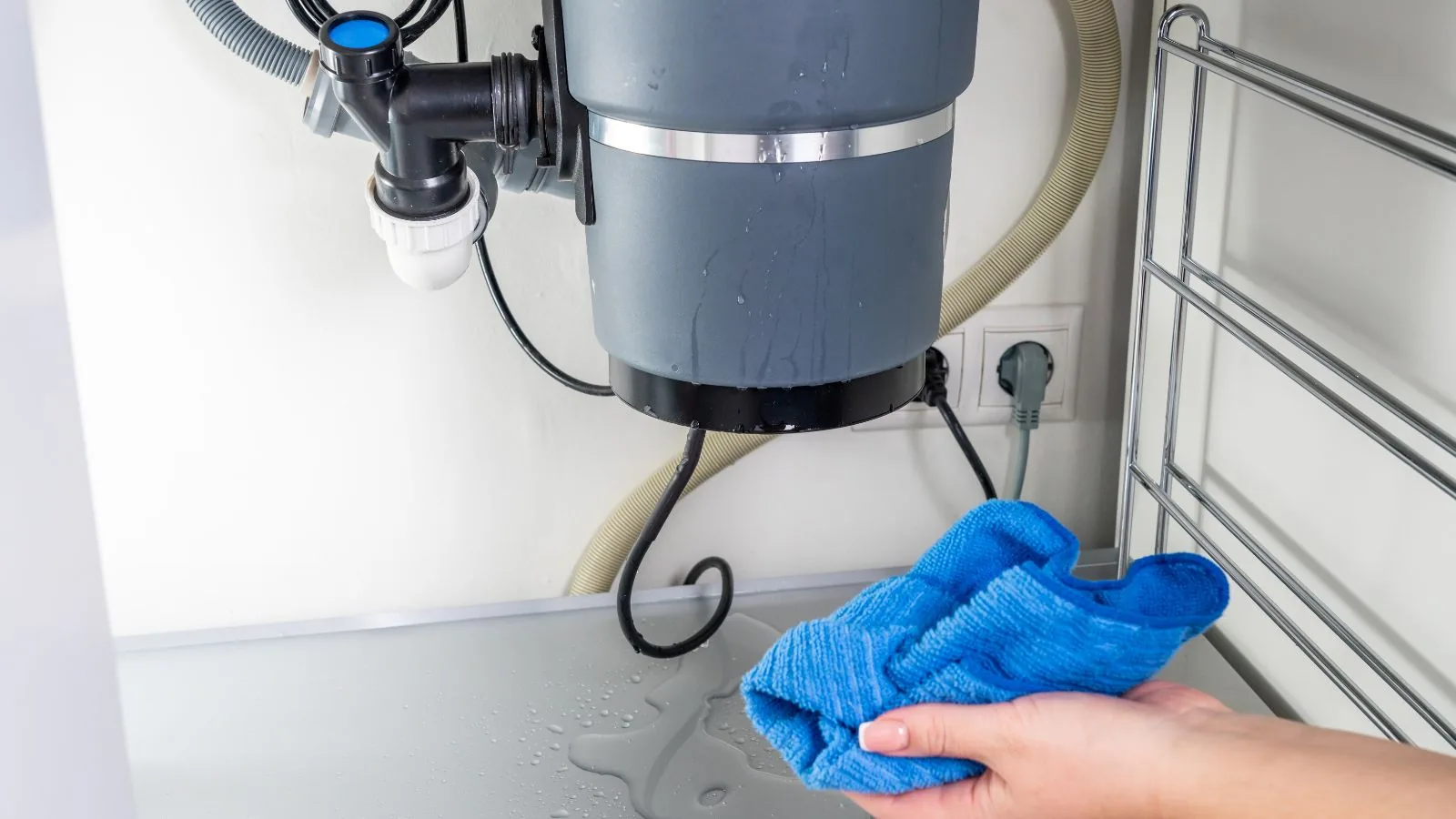
Appliance leaks are the quiet kind of water damage. A cracked washer hose, a failed dishwasher seal or a refrigerator ice maker line can seep for days behind a machine before anyone sees a stain. In Owings Mills townhomes, condos and single-family homes alike, the damage often reaches the subfloor and the unit below before it is discovered. Our 24/7 line is open if you found water.
This page handles the appliance as the source. If the damage is mostly to cabinets and the sink area, read the kitchen page, and for the floor itself see the hardwood floor page.
Appliance leaking now: emergency steps
Close the shutoff valve behind the machine. For a washer, that is usually two valves, hot and cold. For a refrigerator, the valve is on the supply line behind or beneath it. If you cannot reach it, close the main water valve.
Unplug the appliance only if the floor around the outlet is dry. If water is near the outlet, shut off the breaker for that circuit instead, then call us. Pull out the machine only if you can do so without slipping and have towels down.
Which appliances cause the most damage
Washing machines
Braided hoses burst under pressure, and a failed drain hose can pump gallons across a laundry room.
Dishwashers
Door seals and supply lines leak behind a toe kick for weeks.
Refrigerators
Ice maker lines and drain pans leak slowly into hardwood and vinyl.
Other sources
Dehumidifiers, humidifiers and window units overflow when drains clog.
How hidden appliance leaks show up
In multi-level buildings near Mill Station, Metro Centre and other denser Owings Mills developments, a leak on one floor commonly shows up as a stain on another, so notify your neighbor and your association as soon as you see one.
- Floor boards cupping or lifting near the appliance
- Soft, discolored baseboards
- A musty smell in the room
- A ceiling stain in the unit below
- A higher water bill with no obvious cause
Found water behind the machine?
Call now and we will tell you what to look for while you wait.
What we do after an appliance leak
We find the wet area with moisture meters and a thermal camera, extract any standing water and pull baseboards or toe kicks so air can reach wet cavities. Vinyl and laminate flooring often hide water underneath, so we test the subfloor.
Air movers and dehumidifiers dry the area, with readings logged on each visit. If the water reached cabinets or hardwood, we explain what can be dried in place and what should be replaced. Appliance repair or replacement is up to you and your technician.
Cost factors and insurance
Sudden appliance water damage is often covered by homeowners and renters policies, while slow leaks and neglect often are not, so the time frame matters. Check your policy or ask your insurer.
- How long the leak ran before discovery
- Flooring type and whether the subfloor is wet
- Cabinets, baseboards and drywall affected
- Whether a neighbor's unit below is also wet
- Drying days and equipment
Keep the failed hose or part if you can, since it helps document a sudden failure. For a leak that ran into the walls, see wall and drywall water damage. Want your real number? Call the 24/7 line.
Frequently asked questions
Yes. A washer hose can fail at any hour, and our dispatch line answers 24/7. You get shutoff guidance on the call and same-day response when crews are available.
Days or weeks behind a refrigerator or dishwasher. Signs include cupped floorboards, soft baseboards and a musty smell, and they warrant a moisture check even if the floor looks dry.
A sudden hose failure is often covered for the resulting water damage, while a gradual leak often is not. Your policy decides, so read it or ask your insurer.
Many plumbers recommend replacing rubber washer hoses periodically and using braided lines. Ask your plumber what fits your machines, since hose type and age vary.
Water still spreading?
Describe your appliance leak water damage problem to the dispatcher and get safety steps right away.