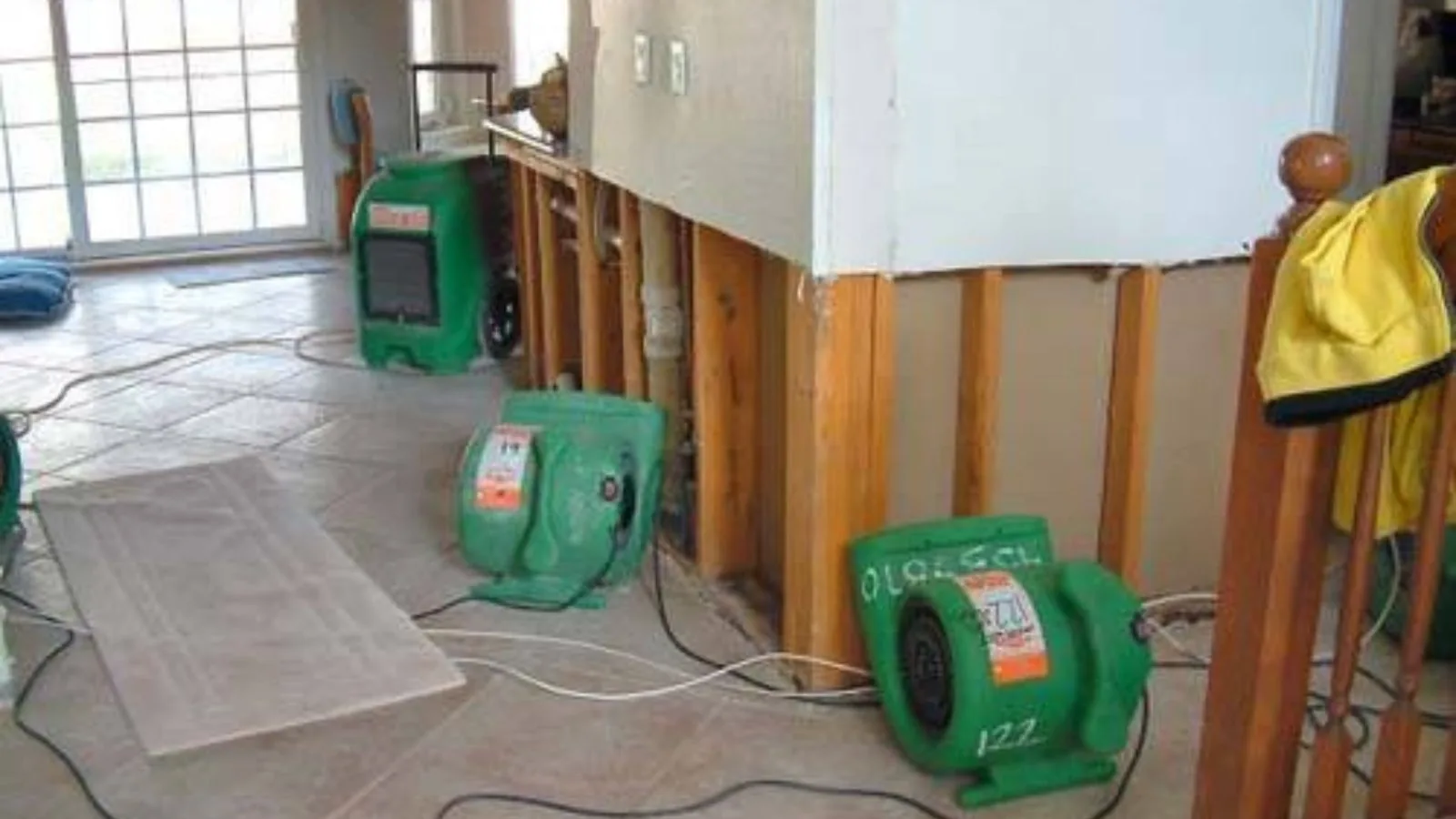
Drywall acts like a wick, drawing water up from the floor and across the wall long after the leak is fixed. Wall and drywall water damage repair in Owings Mills means finding how far the moisture went, drying or removing wet board and baseboards, and repairing it so stains and mold do not come back. Our 24/7 line is staffed if you need a moisture check.
This page focuses on the wall material. The source may be a burst pipe, a storm leak or a slow plumbing drip, and ceilings above are on the ceiling page.
Signs of wet drywall
Paint can hide moisture. A moisture meter shows whether the board is wet even when it looks fine.
- Bubbling or peeling paint
- Swollen or discolored baseboards
- A soft or crumbly feel when pressed
- Brown rings or streaks
- A musty smell
- Cool damp spots
Dry in place or cut it out?
Drywall that was wet briefly with clean water and still feels firm can often be dried in place with air movers and dehumidifiers, sometimes with small holes or removed baseboards to let air into the cavity. Drywall that has swollen, softened or sat wet for days generally needs to be cut out.
Insulation behind wet drywall is removed when it holds water. Contaminated water means removal of porous material. A flood cut removes the wet lower portion, usually up to a clean, dry line.
Baseboards, trim and paint
Baseboards trap water behind them, so crews often pull them to dry the wall base. Solid wood trim can be dried and reused, while MDF swells and is usually replaced.
After drying, repairs include new drywall, taping, texture and paint. Skipping the drying step and painting first is the most common reason stains return.
Wall still damp?
Call and we will take readings before you repair.
How the repair is sequenced
- Find and stop the sourcePlumber, roofer or HVAC tech fixes the cause.
- Measure and markMoisture readings mark the wet area.
- Dry or removeWet material is dried in place or cut out.
- RebuildNew drywall, finish and paint after readings are dry.
Permits and homes in historic areas
Baltimore County requires permits for structural alterations and for plumbing and electrical work, but not generally for drywall replacement of repair size. In a county historical district, exterior work needs a permit, according to the county permits page.
Ask your contractor to confirm what applies to your job. We provide moisture documentation for your repair contractor and insurer.
Insulation and electrical inside the wet wall
Wet drywall is only part of a wall. Fiberglass insulation sags and holds water against the framing, while outlets and switch boxes in a wet wall deserve attention from a licensed electrician before they are used again.
When a wall is opened, technicians check the cavity for insulation, wiring and plumbing and note what they find. If insulation is wet, it is usually removed because it dries slowly and keeps the studs damp.
Keep the breaker off for any outlet that sat in water until it has been checked. It is a small precaution that protects your home and your family.
Cost factors and insurance
Sudden pipe or storm damage is often covered for the resulting wall damage, while slow leaks and maintenance issues often are not. Check your policy or ask your insurer.
- Height and length of wet wall
- Insulation and baseboards affected
- Number of rooms
- Drying days and equipment
- Finish and paint matching
See structural drying for the process of proving a wall is dry. Want your real number? Call us.
Frequently asked questions
Sometimes, if it is clean water and caught early and the board is still firm. Soft, swollen or old wet drywall usually needs to be replaced.
Moisture stays in drywall and insulation until it dries. Readings show whether it has.
Only after the wall reads dry and the source is fixed. Stain-blocking primer helps, but it does not dry the wall.
Until moisture readings show dry board, with a clean line above the wet area.
Water still spreading?
Describe your wall and drywall water damage problem to the dispatcher and get safety steps right away.