Water damage is one of the most expensive surprises in a home purchase. Fresh paint, a new rug and a plug-in air freshener can hide a lot, and sellers do not always know what they have. A careful walk-through takes less than an hour and can save you from buying a problem.
This checklist is for buyers in Owings Mills, but the habits apply anywhere. It does not replace a licensed home inspector, who should always be part of your purchase.
Start outside
Walk the exterior first. Look for gutters that are loose or overflowing, downspouts that dump water against the foundation and soil that slopes toward the house. Check the roofline for missing shingles, stained fascia and moss patches.
Look at the foundation for cracks, efflorescence (white powder) and damp lines on the masonry. Window wells that collect leaves and water are a common route into a basement.
Walk the ceilings and walls
- Round or irregular stains, even if painted over
- Bubbled, peeling or freshly patched areas
- Ceilings below bathrooms, kitchens and laundry rooms
- Corners of rooms and the areas around windows
- Wall paint that looks newer than the rest of the room
Fresh paint in a single patch is not proof of damage, but it is a good reason to ask what changed and when. Ask for the repair records and any warranty paperwork.
Check the floors
Walk slowly across hardwood and look for cupping, crowning or gaps. Press the floor near the dishwasher, sink and washer for softness. Laminate that feels springy or edges that swell can mean water got under the planks.
In carpeted rooms, lift a corner at a vent or closet if the seller allows it and look at the pad and tack strip. Dark staining or a musty smell is worth a note for your inspector.
Use your nose and your eyes in the basement
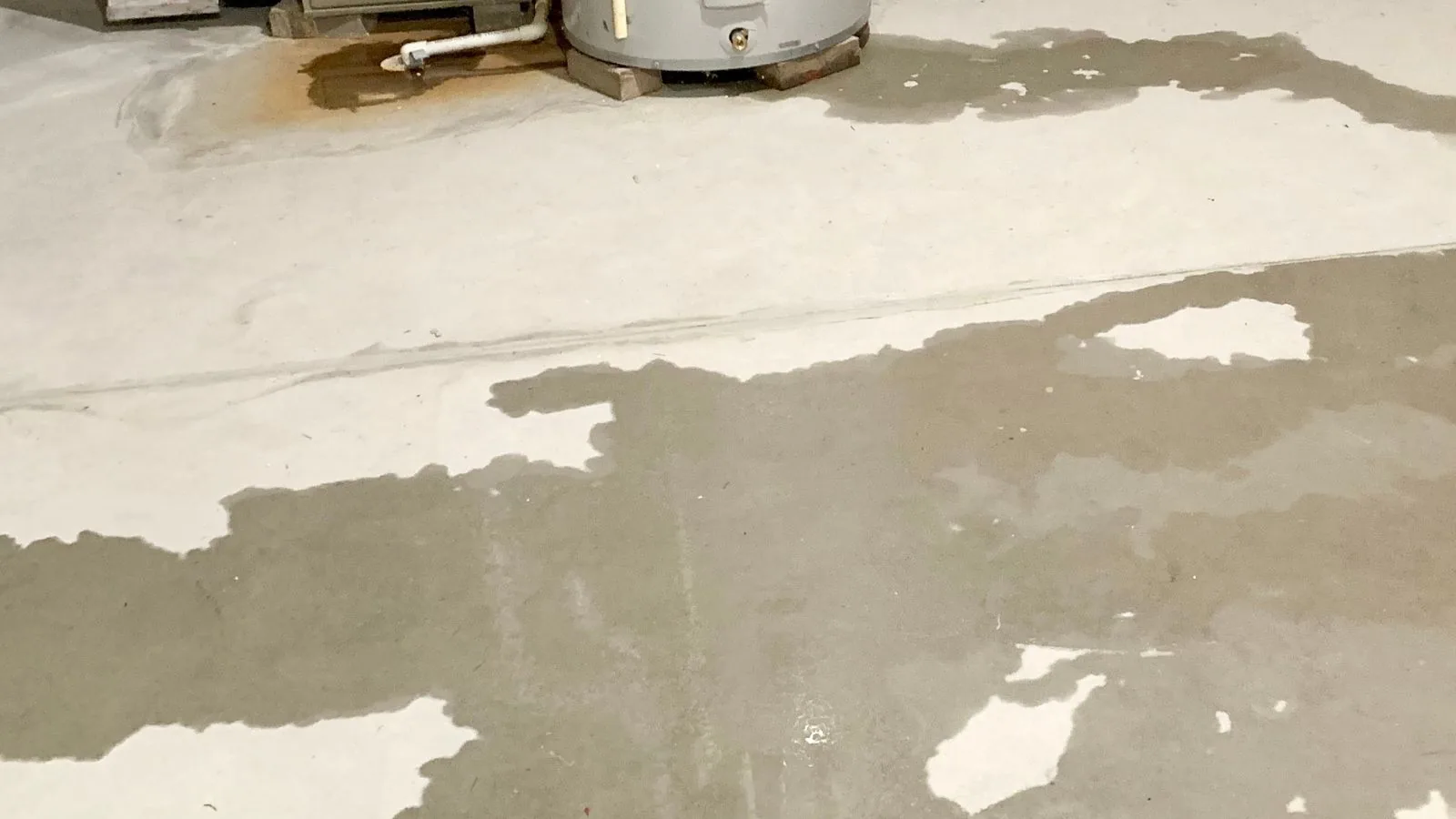
A basement tells you more than any other room. Look for water lines on the walls, rust at the base of the water heater and furnace, stored boxes sitting on blocks and a dehumidifier running in a corner. A dehumidifier is not a defect, but it asks why it is needed.
Check the sump pit if there is one. Ask whether it runs during storms, how old the pump is and whether there is a battery backup. Our basement water damage cleanup page explains what happens when a basement takes on water.
Test the plumbing visible in the open
Open the cabinet under every sink and look for stains, rust on the pipes and swollen particleboard. Run the taps and flush the toilets. Look at the supply lines to the washer and the dishwasher, where rubber hoses and old fittings fail.
Look at the water heater tag for the manufacture date and the area around it for rust or scorch marks. A tank past its expected life is a negotiating point and a risk item.
Use tools, not just eyes
A moisture meter can find water behind paint, and a thermal camera can show temperature patterns that suggest wet materials. Home inspectors often carry both, and you can request that they use them on suspect areas. If the inspector flags a moisture reading, ask a specialist to map the extent before the inspection contingency ends.
We perform moisture mapping when requested and document what we find with photos and readings. Whether you renegotiate or walk away is your decision.
Questions to ask the seller
Ask directly whether there has been any water damage, leak, flood or insurance claim, and ask for dates and repair receipts. In many sales, sellers must disclose known material defects, and the form you receive depends on the transaction. Your real estate agent or attorney can explain what applies to your purchase.
Keep a written record of what you were told. If an answer feels evasive, treat that as information and have the inspector look closer at that area.
Buying in Owings Mills
Owings Mills homes vary widely by neighborhood. Streets near Lyonswood and Foundry Row have newer construction, where problems tend to come from appliance lines and roof flashing, while older properties around the Caves Valley Historic District may have aging pipes, original roofs and stone or block foundations.
Because a 2017 flash flood put creek water near Hammershire Road, check the FEMA Flood Map Service Center for the address before you close, and ask your insurer for a flood quote early. That quote can affect your monthly cost of owning the home.
Frequently asked questions
If the inspector finds elevated readings, stains or a musty basement, yes. A moisture map shows how far the problem extends and helps you decide how to proceed.
No inspection finds everything, especially inside closed walls. Moisture meters and thermal cameras improve the odds, and some conditions only show during rain.
Disclosure rules come from Maryland law and the contract forms used in the sale, not from a county rule we can cite here. Ask your agent or attorney what applies.
Document it right away and call. Check your inspection report and any seller disclosure, and talk to your agent or attorney about next steps while we map and dry the area.
Water still spreading?
Questions about buying a home at your own address? The dispatcher can talk it through.