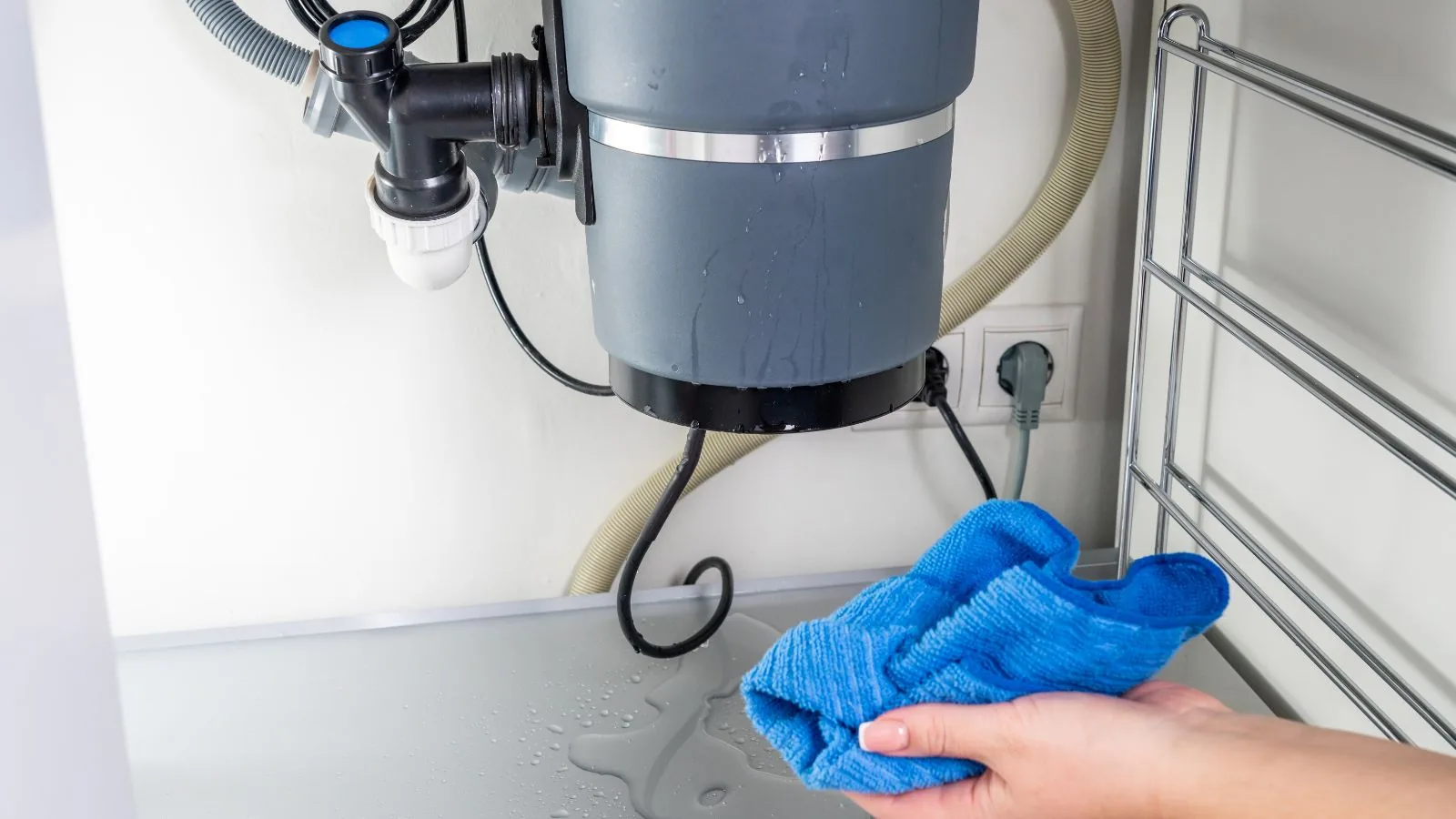
A dishwasher drips onto the floor, a sink trap leaks, a toilet supply line weeps. The mess is small, the water is clean and you wonder whether it is worth calling your insurer.
There is no universal answer, but there is a sensible way to decide. This guide covers the questions to weigh and the records to keep either way.
Start with how small it really is
A small visible puddle can hide a larger problem. Water spreads under cabinets, behind baseboards and into the subfloor, and what you see is often the edge of the wet area. Measure before you decide, not after.
A moisture meter takes readings behind the surface and tells you whether the leak stopped at the floor or kept going. We offer that mapping for leaks that look minor but feel uncertain.
Know your deductible
Most homeowners policies carry a deductible, often a fixed amount or a percentage of the home value. If the repair would cost less than the deductible, there is no payment to claim. Find the number in your policy declarations page.
If the repair is only slightly above the deductible, the payout may be small relative to the effort and the possible effect on your premium. That tradeoff is for you and your agent to weigh.
Ask about claim history and renewals
Insurers keep records of claims, and some also record inquiries or reported incidents. A claim, even a small one, can influence renewal terms depending on the insurer and the situation. Ask your agent how your company treats small water claims and what a closed claim without payment means for your record.
Do not assume the answer. Agents answer this question regularly, and a short phone call can clarify the effect before you commit.
When a claim is more likely to make sense
- Water reached more than one room or the subfloor
- Wet drywall, insulation or cabinets must be removed
- The cause was sudden, such as a burst supply line
- The cost of drying and repair clearly exceeds your deductible
- You found mold or suspect water inside a wall
In those cases, report promptly and keep records. Even if you later decide not to proceed, your timely notice protects your options.
Document even if you do not file
Take photos, keep receipts and write down the date and cause. If damage appears later, such as stains or soft flooring, those early records show what happened and when. Some policies limit coverage for damage that was ignored after a leak.
A short moisture log from a restoration company also helps. It proves the structure was dry at a specific date, which can matter when you sell the home.
Fix the cause and dry the area
Whether you file or not, stop the leak and dry the area completely. A small leak left damp becomes a mold problem in days. Replace worn supply lines and failing seals so the leak does not return.
Our appliance leak water damage page lists the places where small leaks start, from washer hoses to ice maker lines.
A simple way to decide
Write down three numbers: the likely cost of drying and repair, your deductible and any premium effect your agent describes. If the repair cost is far above the deductible, a claim is worth serious consideration. If it is close, the paperwork may not pay off.
Call your agent without filing and ask hypothetical questions. Agents can explain how your policy treats water losses without opening a claim, and that conversation costs nothing.
What the Maryland Insurance Administration suggests
The Maryland Insurance Administration encourages policyholders to read their policy, keep receipts and document temporary repairs. It also notes that damage from sudden pipe bursts is generally covered while the cost of the pipe repair is not.
If you dispute an insurer decision, the administration offers consumer assistance. Start with your policy, then call your agent, then escalate if needed.
Small leaks in Owings Mills homes
In Owings Mills, many small leaks start at appliances in condos and townhomes, where a dishwasher or a washing machine sits on a finished floor above another living space. A drip that seems minor can reach a neighbor ceiling in an attached building, which makes the claim larger than you expect.
Check with your homeowners association about master policy coverage and who carries the first loss in your building. Rules differ by community, and the answer changes who files and who pays.
Frequently asked questions
Only if the damage cost is clearly above your deductible and the effect on your premium makes sense. Ask your agent, and have a moisture check done first so you know the real size.
It can depending on the insurer. Ask your agent how your company treats inquiries and closed claims before you report.
Tell your association and your insurer promptly. Liability and master policy rules differ, so get answers in writing.
Yes. We offer moisture mapping so you know whether the structure is dry, and the records are yours to keep.
Water still spreading?
Questions about claims for small leaks at your own address? The dispatcher can talk it through.