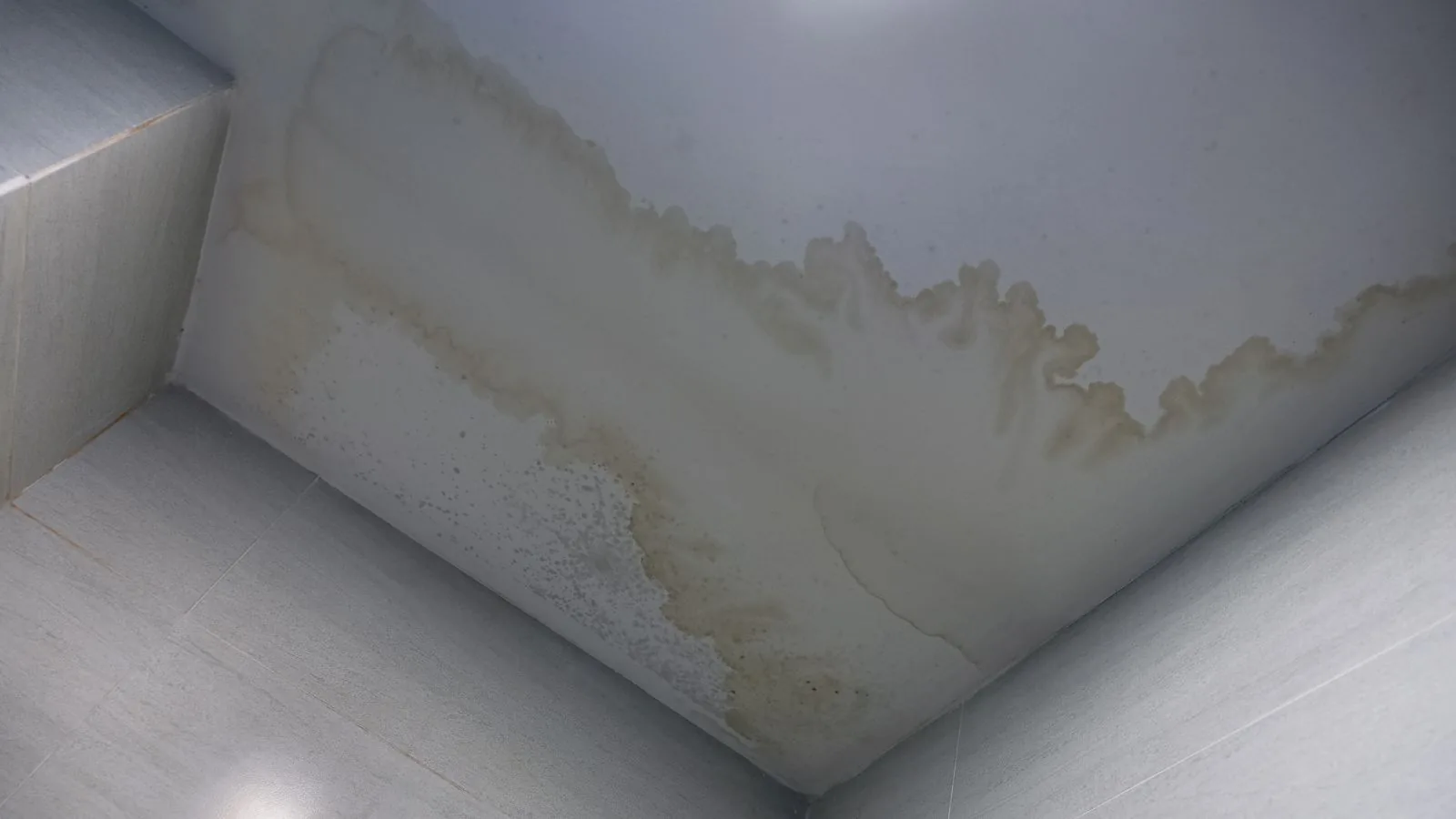
A shower pan is the waterproof base under your shower floor. When it fails, water seeps into the subfloor, the walls and the ceiling below, usually without any visible puddle. Because the damage hides under tile, it often spreads for months before anyone notices.
This guide helps you recognize the signs, understand the repair sequence and know when a leak is a drying problem, a plumbing problem or both.
Why shower pans leak
Tile and grout are not waterproof on their own. The waterproof layer sits underneath, as a rubber liner, a bonded membrane or a preformed pan. When that layer is cut, cracked or poorly sealed around the drain, water passes through every time you shower.
Drain flanges are a common weak point, as are corners and curb edges. Settling, age and movement in the framing can open seams that were tight on the day of installation.
Signs you can see
- Grout that stays dark or crumbles near the shower floor
- Loose or hollow sounding tiles at the base
- Musty odor in the bathroom that returns after cleaning
- Stains, bubbling paint or a sagging patch on the ceiling below
- Baseboards that swell or discolor outside the bathroom
One sign alone may have another cause, such as condensation. Several together deserve a closer look. A wet spot on the ceiling beneath a shower is worth acting on right away.
How a leak is confirmed
A plumber or tile contractor can perform a flood test by plugging the drain and filling the pan to a set depth, then watching the water level over several hours. A drop suggests the pan or drain is leaking. Moisture meters and thermal imaging add information about where the water is traveling.
We use meters and thermal cameras to map wet areas, but we do not repair pans. If the pan is the cause, a licensed plumber or tile professional handles it, and we handle the drying and documentation.
What drying involves
Water in a subfloor or wall cavity cannot dry by itself in a closed space. Technicians may remove the affected drywall, lift flooring and place air movers and dehumidifiers to pull moisture out of the framing. The room is monitored until readings reach normal levels.
If the leak is long term, wood may be stained or soft, and mold may already be present. Those materials are often removed rather than dried. Read our page on wall and drywall water damage for how that decision is made.
Sequence matters
The correct order is stop the leak, dry the structure, then rebuild. Retiling a shower before the framing is dry traps moisture and invites decay. Equally, drying a structure without fixing the pan means the problem returns within weeks.
Plan on coordinating three trades: a plumber for the leak, a drying team for the structure and a tile or general contractor for the rebuild. Ask each to share their findings with the others.
Insurance and shower leaks
Insurers often treat gradual leaks as maintenance, so coverage for a pan that has leaked slowly for a long time can be limited. A sudden failure, such as a supply line that bursts behind the wall, is treated differently. Your policy wording decides.
Whatever the cause, document the damage with photos and moisture readings before anything is torn out. Our guide to water extraction explains what happens when standing water is also present.
Preventing the next leak
If you remodel, ask for a flood test of the new pan before tile goes down. Check caulk at the tub or shower edge twice a year and renew it when it cracks. Keep an eye on the ceiling below, since that is where a failure shows first.
If you rent or own a condo, tell the owner or association at the first sign. A shower leak can reach the unit below, and early notice protects everyone.
Bathrooms in Owings Mills homes
Owings Mills has a large share of townhomes and condominiums built since the 1990s near Metro Centre and Mill Station, where one bathroom often sits above another unit or room. A pan leak in a stacked layout can show up as a ceiling stain in a neighbor home, so condo owners should report it to the association quickly.
Older houses in the Caves Valley area may have original tile over mortar beds, which behave differently from modern membranes. A tile setter familiar with older bathrooms can tell you what the existing build looks like before you cut into it.
Frequently asked questions
Damage can start within weeks, but staining below may take months to appear. Stacked condo units in Owings Mills can pass the water to a neighbor, so report suspicions early.
No. We dry and restore the structure and document the damage. A licensed plumber or tile professional repairs the pan, and we coordinate timing if you want.
A household fan does not reach water inside a subfloor or wall. Professional equipment and moisture readings are needed to confirm that framing is dry.
Treat it as urgent. Stop using that shower and call, because the structure may be holding more water than the stain suggests.
Water still spreading?
Questions about shower pan leaks at your own address? The dispatcher can talk it through.