Caves Valley is a rural historic area near Owings Mills, where farmhouses, stone and frame buildings, fields and streams still define the place. The National Park Service lists the Caves Valley Historic District on the National Register of Historic Places, added on October 20, 1988. If water has gotten into an older building here, the drying plan has to match the building.
We describe the valley by its landmarks and do not claim a precise street boundary for it. Real estate listings place Caves Valley properties along Park Heights Avenue, but we have not confirmed that every address there is inside the district.
What the historic district is
The district covers about 2,100 acres in an upland valley. It includes cultivated fields, pastures, woodlands, streams, clusters of houses and farm buildings. The vernacular buildings are log, stone and frame, and they date to the 18th and 19th centuries according to the registration documents summarized on Wikipedia.
The district lies along the North Branch of the Jones Falls and its contributing streams. The Irvine Nature Center moved to a property in the district in 2008. We did not find documentation of flooding in the district, and we do not claim any.
Why drying an older building takes judgment
Stone and old frame buildings hold moisture differently from newer drywall construction. Plaster walls, wide plank floors and masonry foundations can absorb water slowly and release it slowly. Pushing drying too hard can crack plaster or open gaps in boards.
Technicians use moisture meters to track each material and adjust air movement and dehumidification during the job. That approach is described on our structural drying page.
Where water gets into rural properties
- A failed supply line or water heater in a farmhouse
- A roof or chimney leak in an older building
- Water entering a stone or block foundation after heavy rain
- A leaking line in a crawl space or an unheated outbuilding
- Storm water driven through old windows and doors
We do not claim any of these is common in Caves Valley. They are the sources to check, and the right response depends on which one it is.
Wells, septic systems and who to call
Some rural properties use private wells or septic systems and others use public water and sewer. Ask yourself which applies to you, because it changes who fixes the source. A broken line is a plumber question, a utility problem is a utility question and drying is the restoration question.
If you smell sewage or see waste water indoors, stay out of the area. Sewage is handled as contaminated water, as our sewage backup cleanup page explains.
Water in an older Caves Valley building?
Call and describe the building and the source.
Cellars, crawl spaces and outbuildings
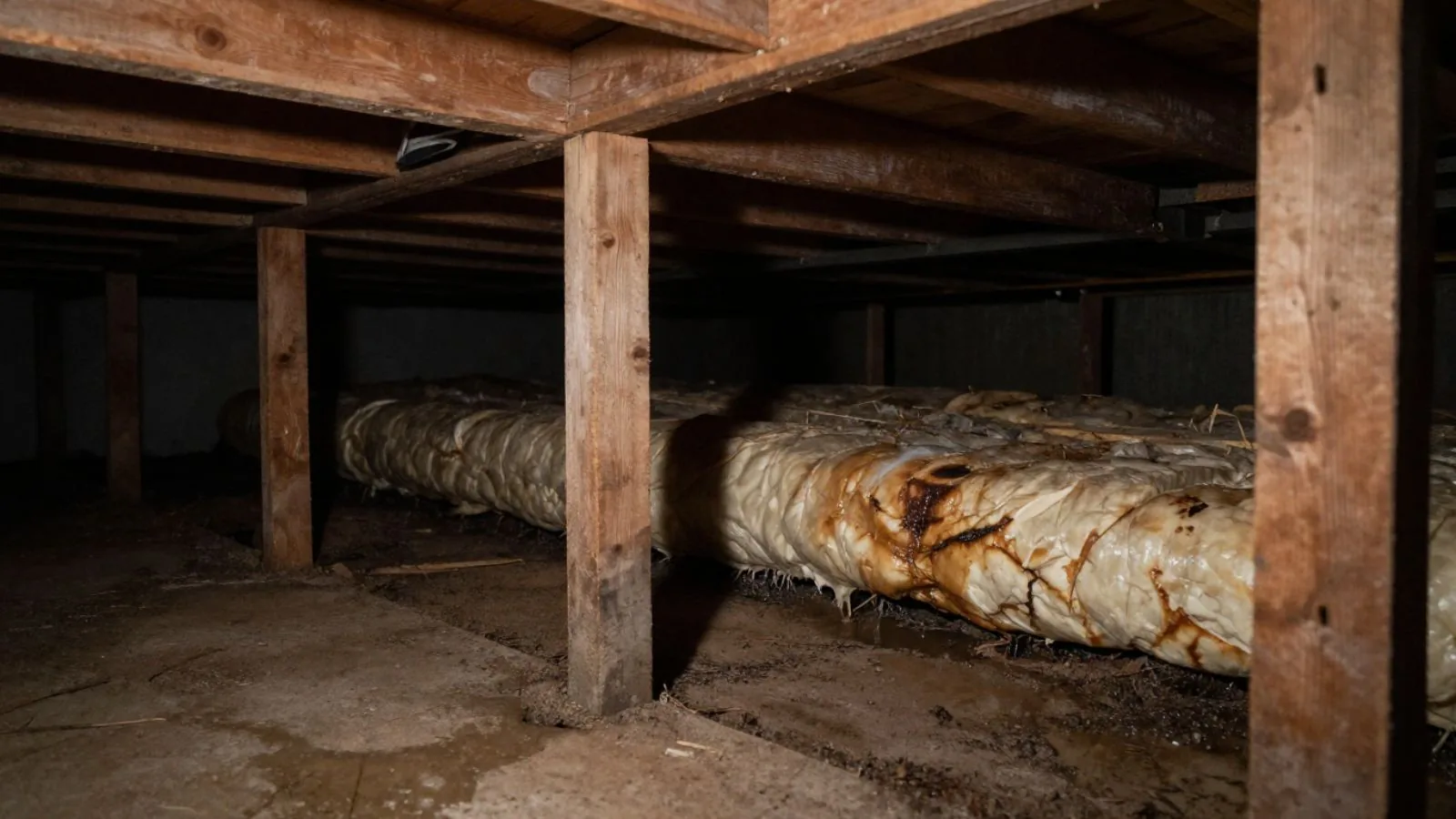
Older houses may have a cellar or a crawl space with a stone or dirt floor, and barns and outbuildings may have none of the waterproofing a newer building has. Standing water in those spaces can be pumped out, but the space may stay damp for days.
Do not enter a flooded cellar if the water may touch electrical wiring or a panel. Our crawl space water damage page explains the safe approach.
Historic properties and repairs
If your building has a historic designation, ask Baltimore County Permits, Approvals and Inspections whether exterior repairs need approval before you begin. Emergency drying, which happens inside the structure, is a different matter from rebuilding a roof or window, but ask before you assume.
Keep photographs of the original condition of any historic material that is removed. That record can matter for the repair and for your insurer.
Insurance and flood questions
Photos, moisture readings and a written scope help document the loss. The Maryland Insurance Administration says standard homeowners policies generally do not cover flood, and it says sudden damage such as a burst pipe is generally covered for the water damage while the pipe repair is not. Ask your insurer about your own policy.
Neighborhood-specific FEMA flood-zone status not verified for Caves Valley. Use the FEMA Flood Map Service Center for your exact address. Baltimore County asks residents to report flooding through 311 or the BaltCoGo app.
Caves Valley on the map
Questions from Caves Valley property owners
We found no documented flood history for the district. It lies along a branch of the Jones Falls with streams running through it, so check your address on the FEMA Flood Map Service Center and ask your insurer about flood coverage.
Often, if the water is clean and drying starts quickly. Technicians monitor each material because old plaster and boards react differently from modern drywall.
Emergency drying happens inside the structure, but exterior repairs may need approval. Ask Baltimore County Permits, Approvals and Inspections before you begin rebuilding.
Say so when you call. A plumbing or utility problem has to be fixed by the right trade, and sewage is treated as contaminated water.
The drying plan depends on the floor, the walls and the use of the building. Describe what is stored there and whether power is connected.
Water still spreading?
Describe the water at your Caves Valley address and get safety steps right away.